



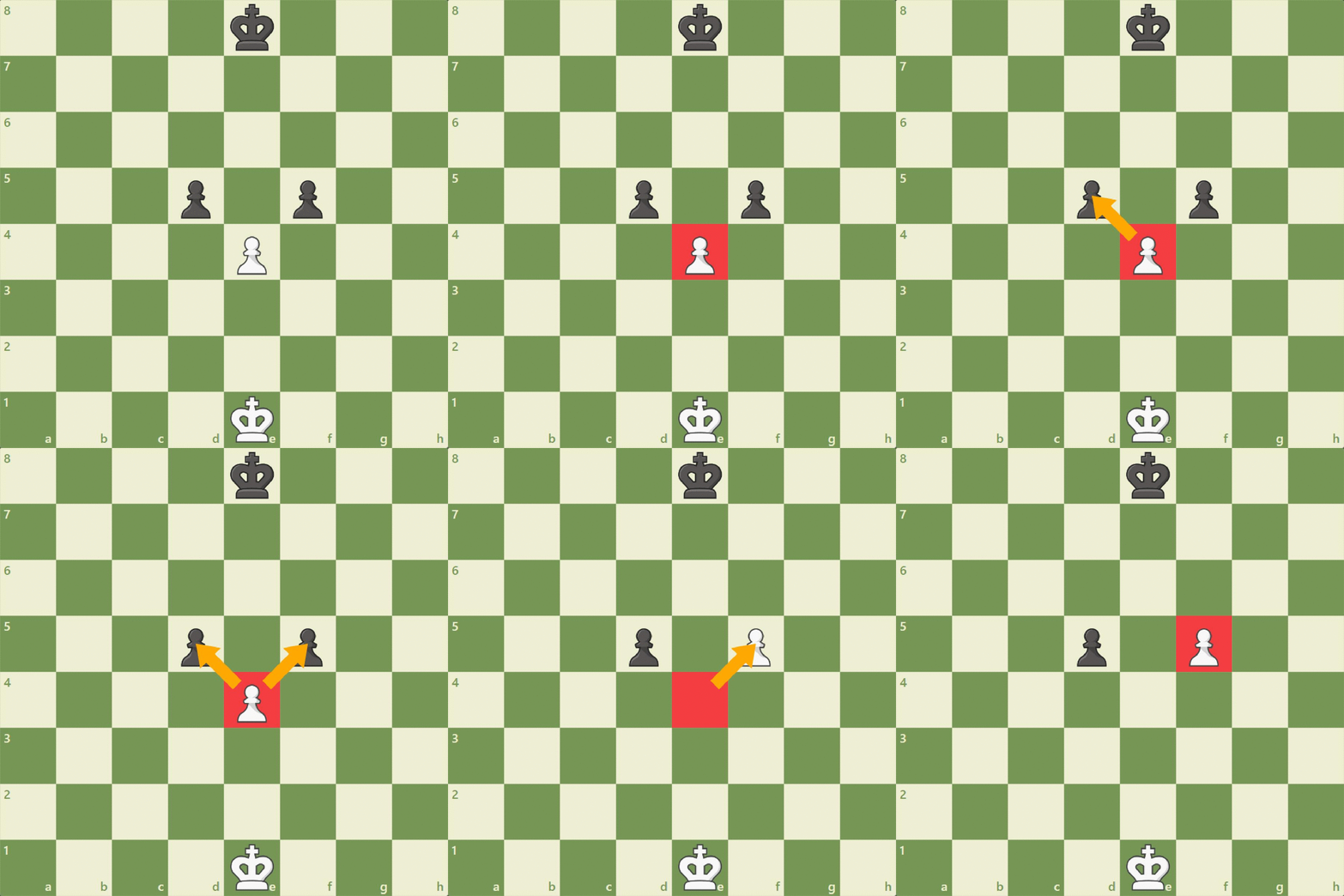
En passant is a French expression which means "in passing" and is abbreviated as e.p. It is a movement of series in chess which is performed after a player moves a pawn two squares forward from its starting position, and an opposing pawn captures it as if it had only moved one square. It is probably the most confusing move for beginner chess players. Actually, many may not even know that this move exists, making it the source of many arguments. En passant may only be played straight away after a two-square square pawn advance, or the right to capture "in passing" is lost. After pawns were granted the ability to move two squares on their first move, the En passant rule was introduced in 1490 to prevent pawns from having too much power or freedom. En passant is the only occasion in chess in which the capturing piece does not replace the captured piece on its square.

Before then pawns could only move one square forward at any time, resulting in many boring defensive matches. The 2-square move was introduced to encourage more positive play and quicker development of the pieces. Nevertheless, some of the more attacking players felt that their opponents were using the move to dodge being captured by the forceful player, already on the 5th rank while the slowcoaches were still on their starting square. As a result, the en passant rule was introduced to ensure that attacking play did not grow unrewarded when defenders used the 2-square move for a purely defensive purpose. It is similar to the rule that prevents castling across squares under attack by an opponent’s piece. 5th century, most people played by rules which didn't allow the pawns to move two squares on their first move. When the two square pawn move was added to speed up the opening phase of the game, it was noticed that it was now possible for a pawn to sneak by an enemy pawn on an adjacent file -- something that was never possible when pawns plodded along at one square per move. The following conditions must prevail for a legal passant capture. 1. The capturing pawn must be on its fifth rank;
2. The captured pawn must be on an adjacent file and must have just moved two squares in a single move (i.e. a double-step move); 3. The capture can only be made on the move immediately after the opposing pawn makes the double-step move; otherwise the right to capture it en passant is lost.


