

The Sinquefield CupMid-Ra1950's Circa Bohemia Staunton Seriesnge Staunton Chess Pieces 90s French Chavet Chess Pieces Fierce Knight Staunton SeriesThe Columbian Triple Weighted Staunton Series
Chess is an ancient and complex game of strategy that has captivated players for centuries. In order to play this game effectively, it is essential to understand the names and moves of the chess pieces. In this blog, we will provide an in-depth look at each piece, its name, and how it moves on the board. By the end of this blog, you will have a thorough understanding of the chess pieces and their roles in the game.Just as the intricate movement of chess pieces fuels the heart of every chess game, we find similarities in the strategies employed within the digital world of gaming. Chess offers a rich variety of pieces with specific movements and attacks – the King, Queen, Bishop, Knight, Rook and Pawns, each mirroring the complexities of the game. Similarly, in the astronaut game, players must maneuver their characters with precision and strategy, ensuring the best path to victory while surviving the challenges of the cosmos.
Our understanding of the interplay between chess pieces certainly translates into a better gameplay experience in virtually any strategic game. Exploring how these pieces serve distinct purposes and function within the game's ecosystem can also yield surprising insights into the mechanics of the digital gaming world. As with chess, the Astronaut game requires players to devise strategies, analyze possible outcomes, and think steps ahead. The lessons learned from understanding chess piece movements are readily applicable when navigating the intricacies of this stellar game.
Treat yourself to an escapade through the universe with the latest adventures of Astronaut game https://astronautgameofficial.com/app/. Like chess, this game will challenge your strategic abilities, offering a unique and thrilling digital gaming experience. Ready to make your move? Launch into action with the Astronaut game today!
The Chessboard
Before we dive into the pieces themselves, let's first take a look at the chessboard. The chessboard consists of 64 squares, arranged in an 8x8 grid. The squares are alternating in color, typically black and white, and each player starts with 16 pieces. The pieces are positioned on opposite sides of the board, with the queen on a square of her color, and the king on the remaining square.
The Pieces
The chess pieces are divided into two categories: the major pieces and the minor pieces. The major pieces are the queen and the rooks, while the minor pieces are the knights, bishops, and pawns. Let's take a closer look at each piece and how they move on the board.
Pawn
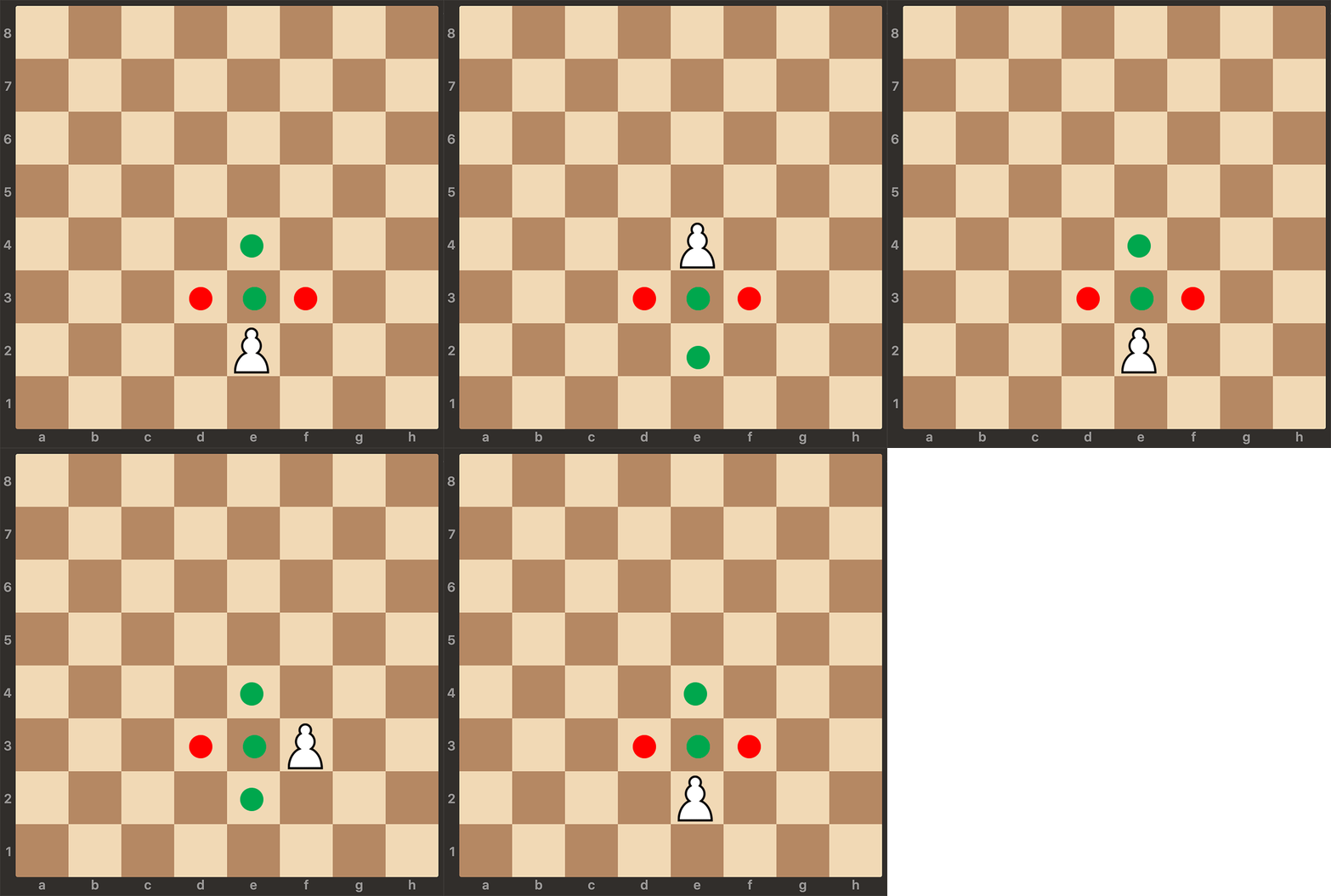
The pawn is the most numerous piece on the chessboard, with each player starting with eight of them. Pawns can move one or two squares forward from their starting position, but after that, they can only move one square forward at a time. Pawns capture diagonally, moving one square diagonally forward to take an opposing piece.
One unique feature of pawns is that they have a special move called en passant. This move allows a pawn that has just moved two squares forward to be captured by an opposing pawn that lands in the square that the pawn would have occupied had it only moved one square forward.
Knight
Net zoals schaken, een strategisch spel, de namen en zetten van de schaakstukken vereist, vereist het navigeren door de online casinowereld dat je je vertrouwd maakt met de verschillende inzetmogelijkheden en strategieën. Tijdens het oefenen op het schaakbord leer je de unieke bewegingen en rollen van de Koning, Koningin, Loper, Paard, Toren en Pion, elk met zijn eigen kracht. Via online casino's zoals het 1 euro casino kunnen zelfs beginnende spelers verschillende casinospellen en inzetstrategieën leren en begrijpen.
Het minimum deposit 1 euro casino dient, net als de pion in het schaken, als een toegangspoort tot de wereld van online gokken. De strategie stelt spelers in staat om de mogelijkheden te testen zonder een enorme financiële verplichting aan te gaan, vergelijkbaar met de essentiële, maar enigszins conservatieve, rol van de pion op het schaakbord. De structuur van dit casino met een laag risico en hoge beloningen is het onderscheidende kenmerk, net zoals elk schaakstuk op unieke wijze bijdraagt aan de winst.
Je hebt geen koningslosgeld meer nodig om te genieten van de spanning van online gokken. Zelfs bij schaken gaat het immers niet altijd om het sterkste stuk; soms kunnen de kleinere stukken je helpen de overwinning te behalen, mits ze goed worden ingezet. Dus, of je nu de zetten op een schaakbord onder de knie krijgt of aan het rad draait bij een casino met minimale storting, het leren van de regels en het maken van slimme zetten is essentieel. Zet verstandig in!
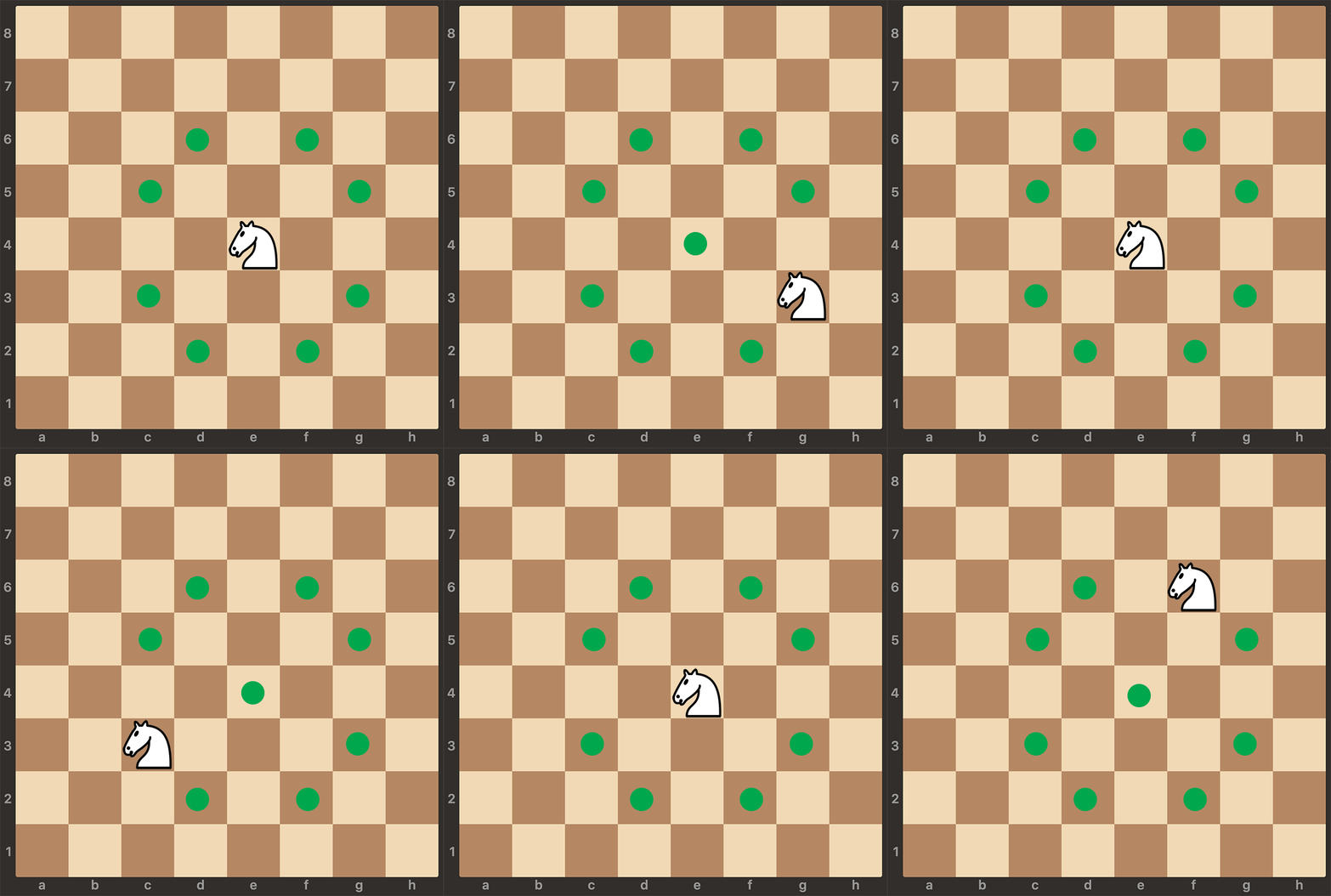
The knight is the only piece that can jump over other pieces on the board. It moves in an L-shape, two squares in any direction and then one square perpendicular to that direction. Knights are the only pieces that can capture a piece without landing on a square of their color.
Bishop
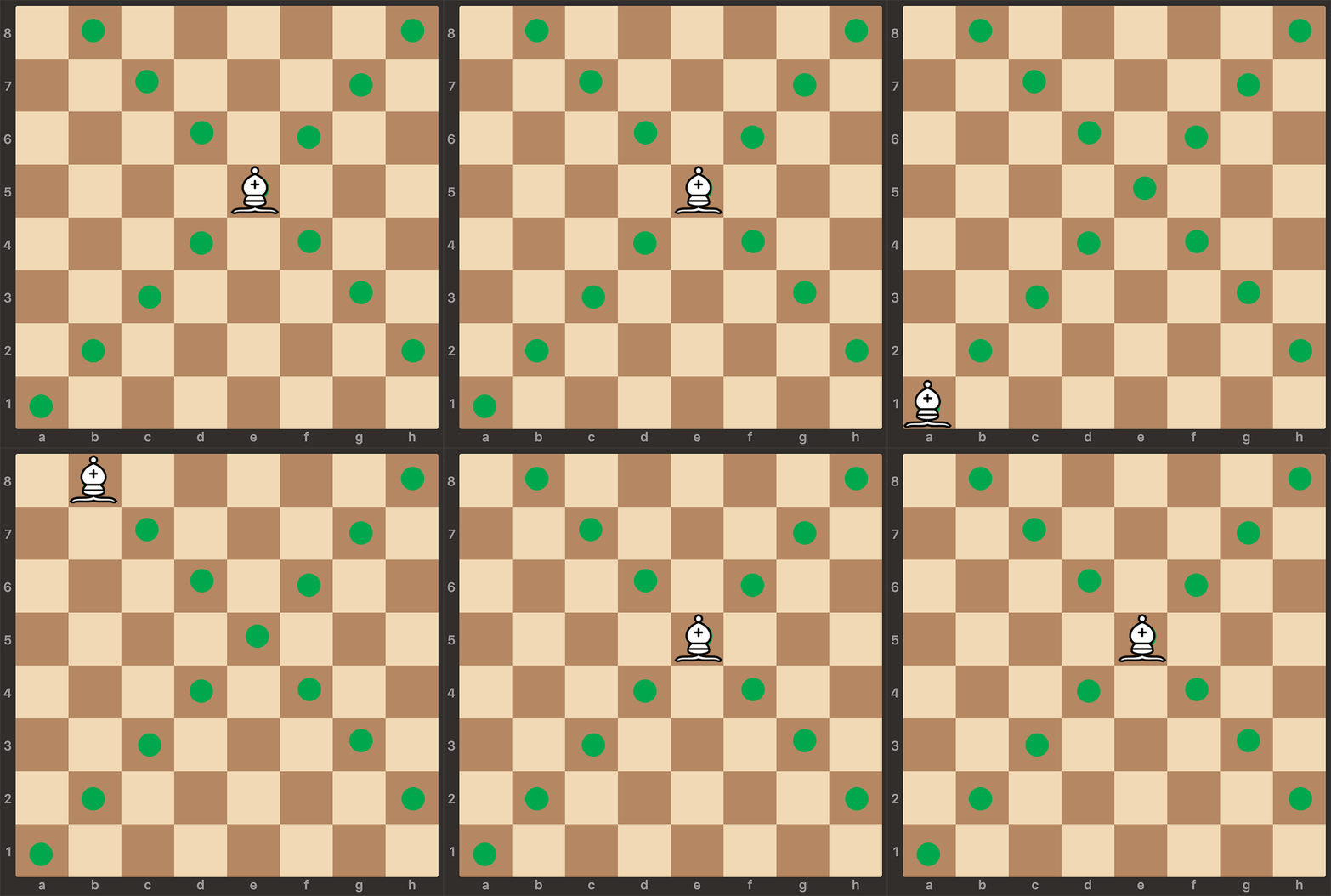
The bishop moves diagonally along the board, but it must always stay on squares of the same color. There are two bishops on the board, one on a light square and one on a dark square. Because of this, they are often referred to as the "light-squared bishop" and the "dark-squared bishop."
Rook
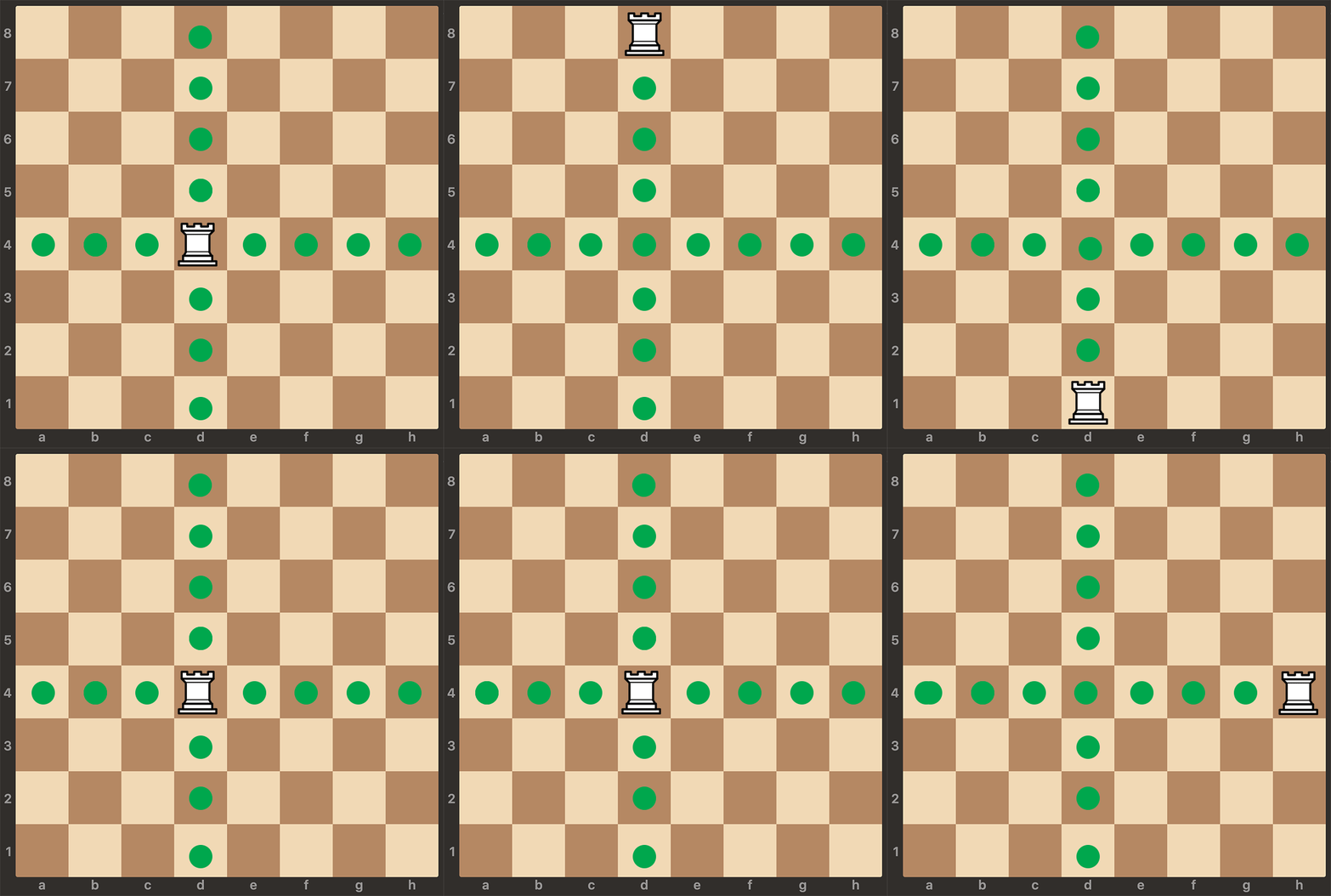
The rook moves horizontally or vertically along the board, as far as it can go in that direction, until it is blocked by another piece or reaches the edge of the board. Each player starts with two rooks, one on each side of the board.
Queen
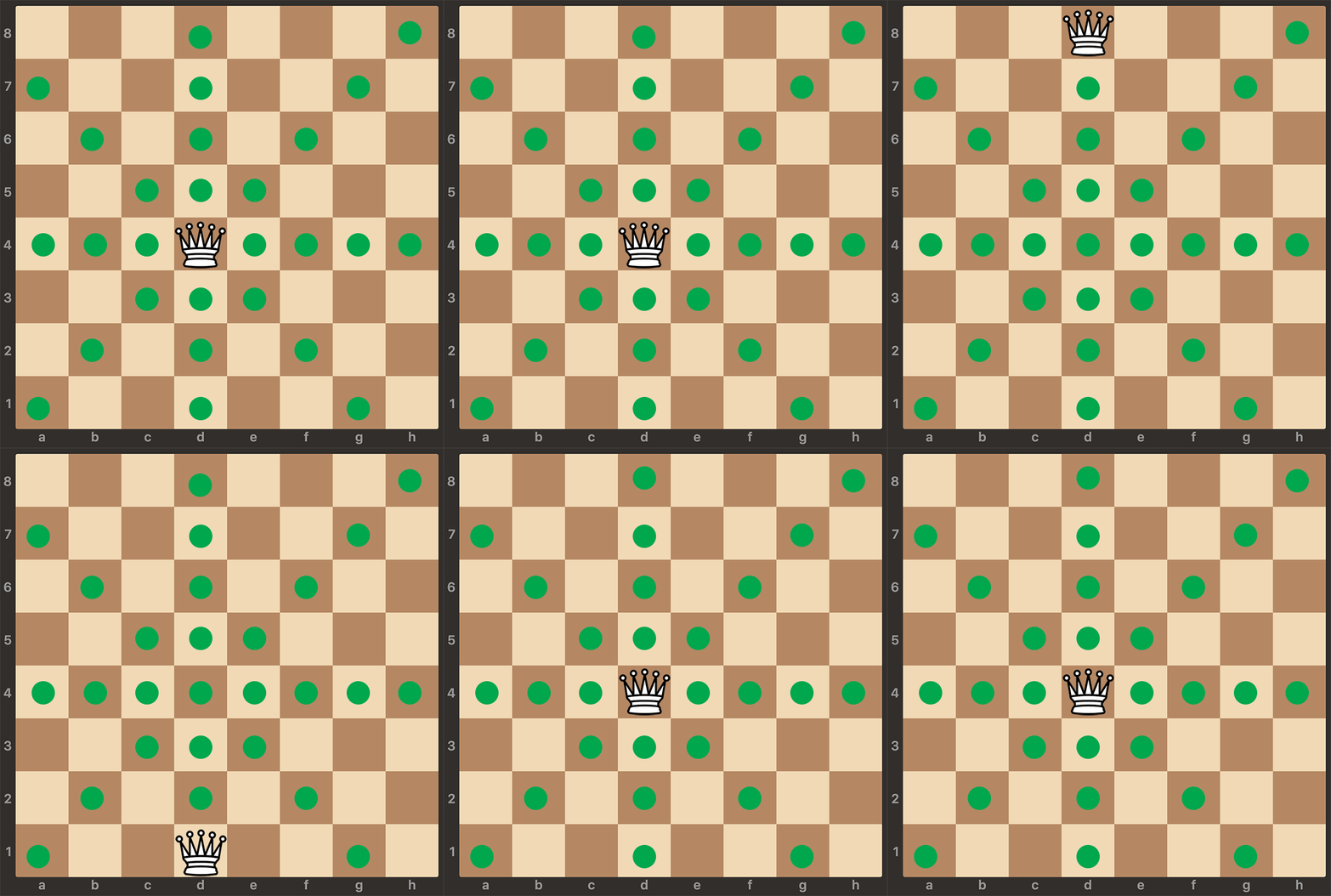
The queen is the most powerful piece on the chessboard, able to move in any direction along a straight line, diagonally or horizontally. The queen is the only piece that can move as far as it wants, as long as it is not blocked by another piece. Each player starts with one queen, which starts on a square of its own color.
King
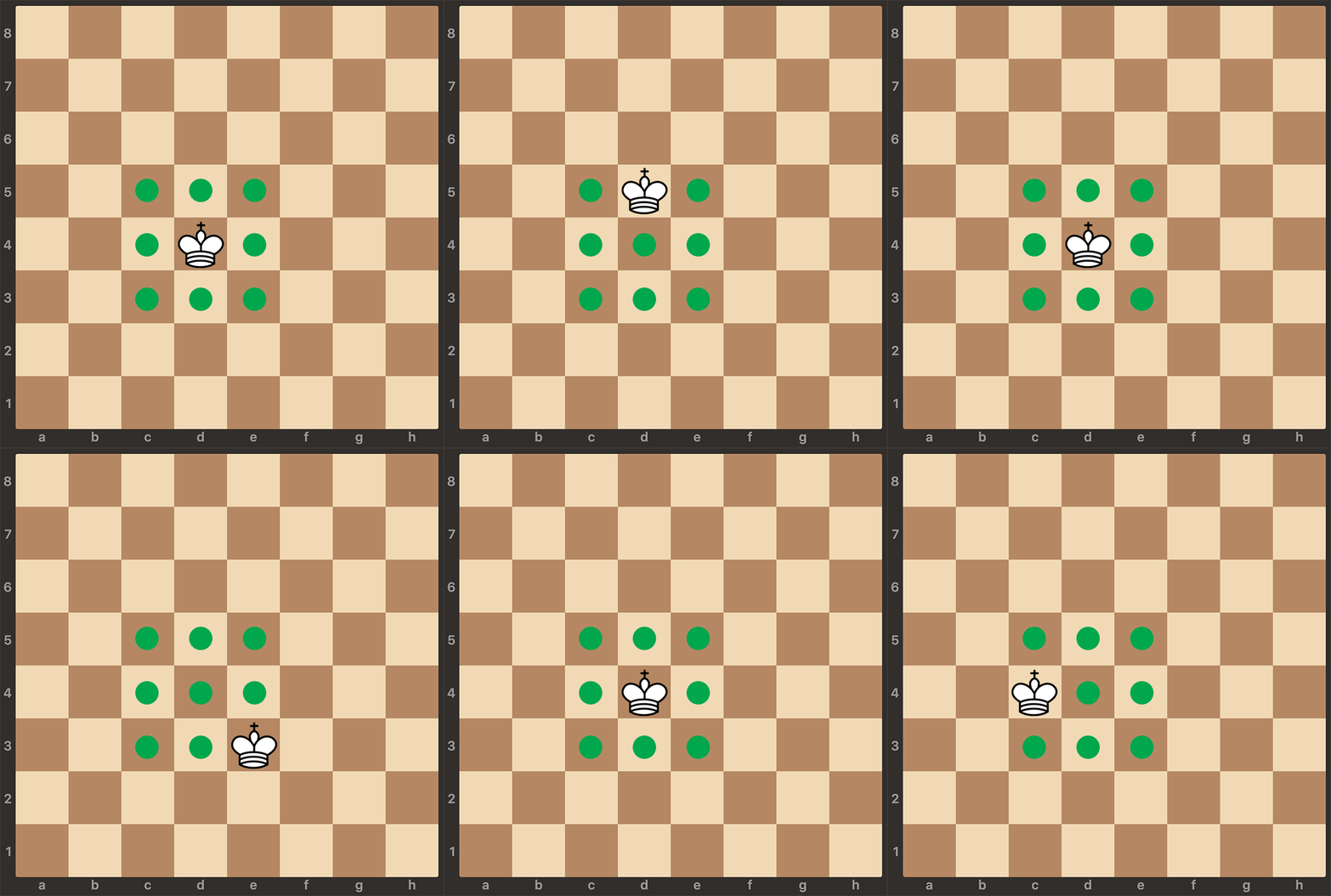
The king is the most important piece on the chessboard, but it is also the weakest. The king can move one square in any direction, but it cannot move into a square that is attacked by an opposing piece. If a king is threatened with capture, it is said to be in check. The goal of the game is to put the opponent's king in a position where it cannot escape capture, which is called checkmate.
Conclusion
In this blog, we have explored the names and moves of the chess pieces. Each piece has a unique role in the game, and understanding how they move is essential to playing chess effectively. By mastering the moves of the pieces, you can take your game of the chess to the different level. We also suggest to explore our wide range of Chess Books which will benefit you to improve your game.
Chess Openings for Modern Play: A Practical Starter Guide for Club Players
Chess openings in modern play are no longer about memorizing endless theory. Today’s club players need practical, flexible openings that lead to playable middlegames, suit their style, and work well both online and over the board.
In this guide, we explore the best modern chess openings for club players, explain why they are effective, and help you build a reliable opening repertoire for competitive play.
Why Modern Chess Openings Matter for Club Players
With engines, databases, and online platforms, opening preparation has become more accessible—but also more overwhelming. The key difference in modern chess is understanding over memorization.
Modern opening play emphasizes:
Rapid and harmonious development
Flexible pawn structures
Avoiding sharp theoretical traps
Reaching middlegames with clear plans
For club players, the goal is not to “win the opening” but to reach positions you understand and enjoy playing.
Essential Opening Principles (Still Apply Today)
Even the most modern openings respect these fundamentals:
Control the center with pawns or pieces
Develop minor pieces efficiently
Castle early for king safety
Connect your rooks
Avoid unnecessary piece moves
Modern openings may delay central occupation or castling, but the underlying principles remain unchanged.
Best Modern Chess Openings for White
The London System
Typical setup: 1.d4 followed by Bf4
The London System is one of the most popular openings among club players because it is easy to learn and highly reliable.
Why it works well in modern play:
Minimal opening theory
Similar setup against many defenses
Strong and solid pawn structure
Typical plans include steady development, central control, and kingside attacking ideas. It is especially effective in rapid and classical formats.
Explore our wooden Staunton chess sets
The Italian Game (Modern Approach)
Moves: 1.e4 e5 2.Nf3 Nc6 3.Bc4
The Italian Game has made a strong comeback at all levels due to its strategic depth and flexible nature.
Modern plans focus on:
Quiet development with c3 and d3
Strong piece coordination
Long-term kingside pressure
This opening is ideal for club players who prefer classical development with modern positional ideas.
Explore our tournament-size chess boards (50–55 mm squares) for serious study.
Queen’s Gambit (Modern Club Repertoire)
Moves: 1.d4 d5 2.c4
The Queen’s Gambit remains one of the most reliable ways to control the center and steer the game into rich middlegames.
Modern club players often favor:
Queen’s Gambit Declined structures
Solid development over risky gambits
Clear strategic plans
This opening suits players who enjoy positional chess and strong endgame foundations.
The English Opening
Move: 1.c4
The English Opening controls the center indirectly and often transposes into familiar pawn structures.
Advantages for club players:
Flexible move orders
Less forced theory
Strong positional foundations
It is an excellent choice for players who enjoy adaptable and strategic play.
Reliable Modern Defenses for Black
Best Defenses Against 1.e4
Caro-Kann Defense
Moves: 1.e4 c6
The Caro-Kann is one of the most trusted modern defenses at club and professional levels.
Key strengths:
Solid pawn structure
Clear development plans
Excellent endgame prospects
It is ideal for players who value structure and consistency.
Scandinavian Defense (Modern Lines)
Moves: 1.e4 d5
The Scandinavian Defense immediately challenges White’s center and leads to practical positions.
Modern ideas emphasize:
Safe queen placement
Quick development
Active piece play
This defense is well suited for club players seeking straightforward and aggressive play.
Best Defenses Against 1.d4
Slav Defense
Moves: 1.d4 d5 2.c4 c6
The Slav Defense is one of the most solid responses to 1.d4.
Why it works:
Strong central control
Durable pawn structure
Backed by top-level theory
It suits players who prefer stable and positional games.
King’s Indian Defense
Moves: 1.d4 Nf6 2.c4 g6
The King’s Indian Defense remains a favorite among attacking players.
Key features:
Dynamic kingside attacks
Flexible piece placement
Rich middlegame plans
This defense is best for players comfortable with complex and tactical positions.
How to Choose the Right Opening for Your Playing Style
Ask yourself:
Do I prefer attacking or positional chess?
How much opening theory do I want to study?
Which middlegames do I feel most comfortable playing?
For club players, consistency matters more than variety. A small, well-understood opening repertoire will always outperform frequent opening changes.
Common Opening Mistakes Club Players Should Avoid
Memorizing moves without understanding ideas
Playing too many openings at once
Ignoring development for early attacks
Relying on traps instead of solid positions
Modern chess rewards clarity, structure, and long-term planning.
Practical Tips for Studying Chess Openings
Study openings on a physical chess board to improve visualization
Replay model games by strong players in your chosen openings
Analyze your own games to identify recurring opening problems
Focus on typical plans rather than engine evaluations
Explore our premium wooden chess sets designed for training and analysis.
Final Thoughts
Modern chess openings are not about memorization—they are about understanding. For club players, the best opening is one that leads to positions you enjoy and understand deeply.
Build a small, reliable repertoire, focus on ideas instead of moves, and let your middlegame skills decide the game.
If you’re planning to buy a chess set this season, whether for yourself, a loved one, or your growing collection, you’re not alone. Chess has seen a remarkable rise in popularity over the past few years, turning beginners into enthusiasts and enthusiasts into full-blown collectors. As the holidays approach, searches for wooden chess sets, Staunton chess pieces, top-selling chess sets, and even cheap chess sets for Christmas gifts reach their peak.
But with hundreds of options out there, antique reproductions, royal chess designs, budget board games, handcrafted wooden chess pieces, it can get overwhelming. This guide brings clarity to the world of chess shopping, helping you find pieces that match your style, budget, and skill level.
Why Wooden Chess Sets Remain the #1 Choice for Players & Collectors
Across the world, players continue choosing wooden chess sets over plastic or metal alternatives for one simple reason:wood feels like tradition.
The game originated on carved wooden boards, and today, premium woods such as Ebony, Sheesham, Padauk, and Boxwood dominate the market.
Benefits of wooden chess:
Durable and long-lasting
Better “board presence” due to natural grain
Smooth, weighted chess pieces for effortless gameplay
Aesthetic appeal suitable for home décor
Perfect for collectors who value craftsmanship
Whether you're looking for a daily playset or a showcase piece, wooden chess sets offer unmatched versatility.
What Makes Staunton Chess Pieces the World’s Favorite
If you’ve ever wondered why Staunton chess sets appear in tournaments, clubs, and major events, the answer is balance and clarity. Introduced in 1849, the Staunton design became the global standard.
Why Staunton remains unbeatable:
Easily recognizable piece shapes
Perfect proportions
Excellent weight and stability
Wide variety of price ranges from cheap starter sets to luxury collector pieces
From beginners buying their first chess set to seasoned tournament players, Staunton remains the most widely searched and purchased design worldwide.
Top-Selling Chess Sets You Should Know About
The search for the top-selling chess set often leads to three major categories:
1. Tournament Chess Sets
Perfect for players who want standard-sized, weighted pieces with a professional feel.
2. Collector & Antique Chess Sets
These include:
Antique chess sets
Historical reproductions
Iconic 1849 Staunton styles
Vintage British designs
BCC, Cooke, and Anderssen designs
Collectors worldwide seek these for their history, craftsmanship, and rarity.
3. Luxury & Royal Chess Sets
Made with premium woods and intricate carving, royal chess sets bring a touch of heritage and grandeur. These are favorites among interior decorators and gift buyers.
Cheap Chess Sets That Still Offer Great Quality (Perfect Christmas Gifts!)
Not every great chess set has to be expensive. Many people search for cheap chess sets during the holidays especially as Christmas gifts for kids, beginners, and casual players.
Budget sets usually include:
Folding wooden boards
Basic Staunton designs
Travel-friendly magnetic chess boards
Plastic tournament sets
Entry-level wooden chess pieces
If you want to gift something meaningful without overspending, budget-friendly chess sets strike a perfect balance.
Why chess makes the perfect Christmas gift:
Timeless and educational
Suitable for all ages
Encourages strategic thinking
A physical break from screens
A gift that lasts a lifetime
And during holiday sales, it's even easier to find quality at low prices.
Antique Chess Sets: A Collector’s Treasure
For chess lovers who appreciate fine artisanship and history, antique chess sets offer unmatched charm. These sets often replicate patterns from the 1800s and early 1900s, featuring:
Hand-turned knights
Distressed finishes
Historically accurate proportions
Rare wood selections
Collectors often seek these pieces not only for play but also as decorative and investment-worthy items.
If your passion lies in heritage gameplay, antique reproduction chess pieces and boards are worth exploring.
Choosing the Right Chess Board for Your Style
Your chess pieces are only half the experience the chess board completes the game.
Here are the most popular types of chess boards:
1. Wooden Chess Boards
Best for both collectors and serious players. They pair beautifully with Staunton and royal designs.
2. Vinyl or Roll-up Boards
Used in clubs and tournaments lightweight, durable, and travel-friendly.
3. Magnetic Travel Boards
Perfect for kids, families, and travelers.
4. Decorative Boards
Inlaid with premium woods, metals, or glass. Popular as gifts or interior décor pieces.
When pairing a board with pieces, always match:
Square size
Piece height
Aesthetic tone
For example, a 3.75" King pairs best with a board of 55–57 mm square size.
Board Games Are Making a Comeback—and Chess Leads the Trend
With families seeking offline entertainment and mentally engaging activities, board games are more popular than ever but chess stands at the top.
Why chess outshines most board games:
Unlimited replay value
Simple rules but endless strategies
Encourages bonding and competition
Cross-generation appeal
Portable and gift-friendly
This resurgence has pushed searches like best chess sets, wooden chess boards, and buy chess online to all-time highs.
How to Choose the Best Chess Set for Your Needs
Here’s a simple guide:
✔ For beginners:
A budget Staunton set or a plastic tournament set.
✔ For casual home play:
Wooden Staunton pieces + wooden chess board.
✔ For collectors:
Antique reproductions, heritage Staunton, premium woods.
✔ For gifting:
Folding wooden sets, magnetic travel sets, royal decorative sets.
✔ For professionals:
Weighted Staunton chess pieces and regulation boards.
Knowing your purpose helps you find the perfect set without confusion.
Final Thoughts: The Perfect Time to Buy Your Chess Set
Whether you’re searching for:
wooden chess sets
high-quality chess pieces
cheap chess sets for Christmas gifts
antique chess sets
royal decorative sets
Staunton tournament pieces
best chess sets to buy in 2025
The market has never been richer with options.
Chess is more than a board game. It’s a tradition, an art form, a collector’s item, and a gift that brings joy to every generation. No matter your budget or preference, the right chess set is waiting for you.
The Dragon and the Queen: Where Eastern Wisdom Meets Western Strategy
The workshop falls silent as Master Chen runs his weathered fingers across the smooth rosewood surface of a chess knight. In that moment, twenty centuries of strategic tradition converge the ancient wisdom of Chinese Xiangqi, the disciplined precision of Japanese Shogi, and the royal elegance of international chess. This isn't just a piece of wood; it's a bridge between cultures, a testament to how chess sets Asia represents far more than gaming equipment.
During my twenty-three years crafting chess sets, I've shipped over 60,000 sets across the Asia-Pacific region, from the bustling streets of Hong Kong to the quiet temples of Kyoto. What I've discovered is that Asian chess culture isn't simply adopting Western chess it's transforming it, infusing centuries-old strategic philosophy with contemporary global competition.
The numbers tell an extraordinary story. The Asia-Pacific chess market, valued at $540.78 million in 2024, is projected to grow at 6% annually through 2031 outpacing both European and American markets. But behind these figures lies something profound: Asia isn't just consuming chess; it's redefining what chess means in the 21st century.
From Singapore's tech entrepreneurs who see chess as cognitive training, to elderly Chinese masters who compare international chess to their beloved Xiangqi, to Indian families carrying forward a 1,500-year tradition, Asian chess markets demand something unique. They want chess sets that honor both Eastern aesthetic principles and Western competitive standards pieces that feel as comfortable in a Beijing park as they do at a FIDE tournament in Seoul.
The Asian Chess Renaissance: Market Dynamics and Cultural Drivers
The Numbers Behind the Growth
The Asia-Pacific region now represents 23% of the global chess market, with a growth trajectory that's reshaping the entire industry. Unlike Western markets that emphasize individual collecting, Asian markets focus on community engagement, educational value, and multigenerational family play.
Key Market Drivers:
Educational Integration: Asian governments increasingly recognize chess as cognitive development tool
Digital-Physical Convergence: Asian players seamlessly blend online chess with physical board appreciation
Cultural Bridge Building: Chess serves as neutral ground for international business and diplomatic relations
Generational Bonding: Grandparents teaching grandchildren create sustained demand for quality family sets
Regional Market Breakdown:
China: $156.4 million (29% of Asian market)
India: $135.2 million (25% market share)
Japan: $97.8 million (18% market share)
South Korea: $78.3 million (14% market share)
Southeast Asia: $73.1 million (14% combined)
Cultural Adaptation vs. Global Standards
What fascinates me most about Asian chess markets is how they balance cultural adaptation with international standardization. Unlike other regions that either fully embrace or completely resist global chess standards, Asian markets seek harmony between local preferences and worldwide compatibility.
Traditional Chess Games Influencing Preferences:
Xiangqi (Chinese Chess) Impact:
Asian customers familiar with Xiangqi often prefer chess sets with clear piece differentiation and symbolic rather than realistic design elements. The flat, symbolic nature of Xiangqi pieces translates into appreciation for chess sets with distinct silhouettes and clean lines.
Shogi (Japanese Chess) Influence:
Japanese customers, accustomed to Shogi's disciplined aesthetics and captured piece reuse, often gravitate toward chess sets with precise geometric proportions and storage systems that honor each piece's individual importance.
Chaturanga Heritage:
Indian customers, connected to chess's ancient origins, show strong preference for traditional Staunton patterns while appreciating sets that acknowledge chess's Indian birthplace through materials or subtle design elements.
Regional Preferences Across Asia-Pacific
https://www.youtube.com/watch?v=noLYBPrF0ZY
East Asia: Precision Meets Tradition
China: The Rising Chess Power
Chinese chess preferences reflect the country's rapid economic development and deep cultural roots. Chinese customers approach chess set purchases with characteristic thoroughness, researching materials, construction methods, and long-term value.
Material Preferences:
Primary Choice: Premium hardwoods (Sheesham, Rosewood) that age beautifully
Secondary Options: High-quality plastics for educational and club use
Luxury Segment: Jade inlay sets and traditional Chinese wood combinations
Design Aesthetics:
Chinese customers prefer chess sets that balance international standardization with subtle Eastern design elements. They appreciate pieces with clean lines, precise proportions, and finishes that highlight natural wood grain rather than heavy ornamentation.
Cultural Considerations:
Color Preferences: Red and black combinations honor traditional Chinese aesthetics
Symbolic Elements: Pieces that incorporate feng shui principles in their balance and proportions
Family Focus: Sets sized for multiple generations, from children to elderly players
Japan: Engineering Precision in Chess Craft
Japanese chess set preferences reflect the country's commitment to precision engineering and aesthetic minimalism. Japanese customers expect chess sets that meet exacting quality standards while embodying wa (harmony) principles.
Quality Expectations:
Tolerances: Piece measurements within 0.1mm specifications
Weight Distribution: Perfect balance for optimal tactile experience
Surface Finish: Mirror-smooth surfaces without tool marks
Joinery: Invisible connections and seamless construction
Aesthetic Principles:
Japanese preferences align with traditional design concepts: simplicity, natural materials, and functional beauty. Chess sets that embody these principles command premium prices in Japanese markets.
Cultural Integration:
Storage Aesthetics: Beautiful storage solutions that honor each piece
Seasonal Appreciation: Sets that complement traditional Japanese interior design
Meditation Integration: Chess sets suitable for contemplative, meditative play
South Korea: Technology Meets Tradition
Korean chess markets represent fascinating synthesis of technological innovation and cultural preservation. Korean customers seek chess sets that integrate seamlessly with digital chess platforms while maintaining traditional craftsmanship appeal.
Technology Integration:
Smart Board Compatibility: Sets designed to work with digital analysis tools
Streaming Optimization: Pieces and boards that photograph well for online content
Educational Technology: Integration with Korean educational software systems
Cultural Preferences:
Minimalist Design: Clean, modern aesthetics that complement contemporary Korean interior design
Premium Materials: High-quality woods and metals that convey status and achievement
Community Focus: Sets appropriate for Korean chess club culture and social playing
South Asia: Honoring Chess's Ancient Origins
India: The Birthplace Perspective
Indian chess markets present unique dynamics as the birthplace of chess meets modern global competition. Indian customers possess deep appreciation for chess heritage combined with practical needs for tournament play and educational use.
Heritage Appreciation:
Indian customers show strong preference for chess sets that acknowledge India's role in chess development. They appreciate traditional Staunton patterns while valuing sets that incorporate Indian craftsmanship traditions.
Educational Market:
School Programs: Massive demand for durable, affordable sets for educational institutions
Coaching Requirements: Tournament-standard sets for professional chess training
Family Traditions: Multi-generational sets that serve as family heirlooms
Economic Considerations:
Indian markets demonstrate remarkable price sensitivity combined with quality consciousness. Customers seek maximum value while maintaining standards appropriate for serious chess play.
Regional Variations:
North India: Preference for traditional materials and classical designs
South India: Technology integration and modern aesthetic preferences
Metropolitan Areas: International standards with local cultural elements
Rural Markets: Emphasis on durability and educational value
Southeast Asia: Cultural Diversity in Chess Preferences
Singapore: International Hub Dynamics
Singapore's chess market reflects its position as international business and cultural hub. Singaporean customers seek chess sets that project professional sophistication while accommodating multicultural family dynamics.
Professional Market:
Corporate Gifts: Premium sets for business relationship building
Executive Recreation: High-quality sets for professional relaxation
International Standards: FIDE-compliant sets for tournament participation
Cultural Synthesis:
Singaporean preferences blend Chinese heritage, Malay traditions, Indian connections, and Western business culture, creating demand for chess sets that work across multiple cultural contexts.
Thailand, Malaysia, Philippines: Emerging Markets
These growing markets show increasing sophistication in chess set preferences, influenced by educational expansion, economic development, and international chess exposure.
Common Preferences:
Climate Considerations: Sets designed for tropical humidity and temperature variations
Educational Focus: School and community program requirements
Cultural Integration: Respect for local artistic traditions and color preferences
Material Preferences and Cultural Significance
Traditional Asian Woods in Chess Construction
Asian chess markets show sophisticated understanding of wood characteristics, influenced by centuries of woodworking traditions and cultural wood significance.
Regional Wood Preferences:
Region
Preferred Woods
Cultural Significance
Market Position
China
Rosewood, Ebony, Bamboo
Prosperity, longevity, growth
Premium to luxury
Japan
Cherry, Maple, Hinoki
Seasonal beauty, purity, sanctity
Ultra-premium
India
Sheesham, Sandalwood, Teak
Heritage, spirituality, durability
All segments
Southeast Asia
Tropical hardwoods, Rattan
Local identity, sustainability
Economy to premium
Cultural Color Preferences and Symbolism
Asian chess markets demonstrate sophisticated color awareness rooted in cultural traditions and symbolic meanings.
Color Significance Across Cultures:
Chinese Market:
Red/Black Combinations: Traditional Chinese chess colors, symbolizing good fortune and dignity
Natural Wood Tones: Appreciation for wood's natural beauty without artificial coloring
Gold Accents: Luxury market preference for subtle gold highlighting
Japanese Market:
Natural Finishes: Emphasis on wood's natural color and grain patterns
Seasonal Variations: Preferences that change with traditional seasonal aesthetics
Monochromatic Elegance: Single-color variations in different wood tones
Indian Market:
Traditional Contrasts: Dark and light wood combinations honoring chess heritage
Sacred Woods: Sandalwood and other woods with spiritual significance
Regional Variations: Color preferences reflecting regional cultural traditions
Sustainability and Environmental Consciousness
Asian chess markets increasingly emphasize environmental responsibility, particularly in developed economies where consumers actively seek sustainable products.
Sustainability Preferences:
Certified Woods: FSC and PEFC certification increasingly important
Local Sourcing: Preference for regionally sourced materials when possible
Renewable Materials: Growing interest in bamboo and other rapidly renewable options
Traditional Methods: Appreciation for hand-crafted production reducing energy consumption
Chess Set Design Adaptations for Asian Markets
Piece Design Modifications
Asian chess markets have driven several design innovations that balance international chess standards with regional aesthetic preferences.
Size and Proportion Adaptations:
Traditional Staunton proportions sometimes require modification for Asian preferences. Many Asian customers prefer slightly more compact pieces that fit comfortably in smaller living spaces common in Asian urban environments.
Storage and Display Solutions:
Asian customers show greater interest in chess sets with integrated storage and display capabilities, reflecting cultural values of harmony, organization, and respect for game equipment.
Cultural Design Elements:
While maintaining international chess functionality, Asian market chess sets often incorporate subtle design elements that acknowledge local cultural traditions:
Chinese Market: Pieces with subtle curves reminiscent of traditional Chinese art
Japanese Market: Clean geometric forms aligned with Japanese design principles
Indian Market: Traditional proportions and details honoring chess's Indian origins
Southeast Asian Markets: Integration of local artistic motifs and craftsmanship styles
Board Design Considerations
Chess board preferences in Asian markets reflect practical considerations and cultural aesthetics.
Size Preferences:
Asian markets often prefer chess boards slightly smaller than European or American standards, accommodating smaller living spaces while maintaining tournament compatibility.
Material Choices:
Solid Wood Boards: Premium market preference for traditional hardwood construction
Veneer Boards: Mid-market option balancing quality with affordability
Folding Boards: Practical solutions for space-conscious Asian urban living
Roll-up Boards: Educational and club market preferences for portability
Aesthetic Integration:
Chess boards designed for Asian markets often feature design elements that integrate seamlessly with Asian interior design principles and furniture styles.
Educational and Tournament Markets in Asia
Scholastic Chess Growth
Asian educational markets represent the fastest-growing segment for chess set sales, driven by government recognition of chess's educational benefits and expanding school chess programs.
Educational Requirements:
Durability Standards: Sets must withstand intensive daily use by students
Safety Compliance: Meeting strict Asian safety standards for educational materials
Size Optimization: Pieces sized appropriately for different age groups
Storage Efficiency: Compact storage solutions for classroom environments
Regional Educational Approaches:
China: Mass adoption in schools with standardized equipment requirements and bulk purchasing programs
India: Integration into government educational initiatives with emphasis on cognitive development
Japan: Precision educational standards with emphasis on proper chess etiquette and respect for equipment
South Korea: Technology integration with digital learning platforms and online chess education
Tournament and Club Markets
Asian tournament chess markets demand equipment that meets international standards while accommodating regional preferences and practical requirements.
Tournament Equipment Standards:
FIDE Compliance: Strict adherence to international tournament regulations
Durability Requirements: Equipment capable of withstanding intensive tournament use
Climate Adaptability: Pieces and boards designed for Asian climate variations
Storage and Transport: Efficient solutions for tournament organization and player transport
Club Market Characteristics:
Asian chess clubs often serve as community centers with multigenerational membership, creating unique equipment requirements that balance serious competitive needs with family-friendly accessibility.
ChessBazaar's Asian Market Approach
Understanding Eastern Preferences
Our success in Asian markets stems from deep understanding of regional preferences combined with commitment to international quality standards. We don't simply export Western chess sets to Asia; we adapt our craftsmanship to meet specific Asian requirements.
Cultural Sensitivity in Design:
Color Harmonies: Chess sets designed with Asian color preferences and cultural significance
Proportional Balance: Pieces proportioned for Asian ergonomic preferences and living spaces
Material Selection: Woods and finishes that resonate with Asian aesthetic traditions
Packaging Presentation: Packaging that honors Asian gift-giving traditions and storage preferences
Quality Standards for Asian Markets:
Asian customers often expect higher quality standards than other international markets, particularly in precision, finish quality, and long-term durability.
Regional Customization:
Chinese Market: Sets incorporating feng shui principles and traditional Chinese aesthetic elements
Japanese Market: Ultra-precision manufacturing meeting Japanese quality expectations
Indian Market: Traditional craftsmanship methods honoring India's chess heritage
Southeast Asian Markets: Climate-appropriate materials and finishes for tropical environments
Customer Success Stories Across Asia
From Beijing to Bangkok: Real Asian Customer Experiences:
Zhang Wei - Beijing Software Engineer:
"I grew up playing Xiangqi with my grandfather, but when I started competing in international chess, I needed a set that honored both traditions. ChessBazaar's rosewood set perfectly balances the precision I need for tournament analysis with the cultural resonance that connects me to my chess roots. The pieces feel alive in your hands substantial enough for serious study, beautiful enough to display in my apartment."
Tanaka-san - Tokyo Business Executive:
"Precision matters to me, whether in business or chess. When I ordered my ebony and boxwood set, I was impressed by the manufacturing accuracy every piece perfectly weighted, every surface mirror-smooth. But what surprised me was the subtle aesthetic harmony. The set looks natural in my home, complementing rather than competing with my interior design. It's become a conversation piece for business guests who appreciate quality craftsmanship."
Priya Sharma - Mumbai Chess Coach:
"As a chess coach working with students from age 6 to 60, I need sets that inspire respect for the game while meeting practical teaching requirements. ChessBazaar provided exactly what I needed beautiful enough to command attention, durable enough for daily use, sized perfectly for different age groups. My students treat these sets with reverence, understanding they're holding something special."
Investment and Collector Markets in Asia
Asian Chess Collecting Traditions
Asian chess collecting markets show unique characteristics that blend traditional Asian collecting principles with contemporary chess set appreciation.
Collecting Motivations:
Cultural Bridge: Chess sets that connect Eastern and Western traditions
Craftsmanship Appreciation: Recognition of superior woodworking and artistic skill
Family Heritage: Sets intended as multi-generational family treasures
Investment Potential: Understanding chess sets as alternative investment assets
Regional Collecting Patterns:
Chinese Collectors: Focus on sets with exceptional materials and documented craftsmanship provenance
Japanese Collectors: Emphasis on manufacturing precision and aesthetic perfection
Indian Collectors: Preference for sets acknowledging India's chess heritage and traditional craftsmanship
Southeast Asian Collectors: Interest in sets reflecting regional cultural identity and craftsmanship traditions
Market Performance and Investment Potential
Asian chess set collecting markets demonstrate strong growth and investment performance:
Performance Data (2015-2025):
Premium Asian Market Sets: 187% average appreciation
Traditional Craftsmanship Pieces: 156% average appreciation
Limited Edition Asian Designs: 234% average appreciation
Cultural Heritage Sets: 198% average appreciation
Investment Considerations:
Asian chess set investments often outperform other regional markets due to:
Cultural Significance: Sets connecting multiple Asian chess traditions
Quality Appreciation: Asian markets' sophisticated understanding of craftsmanship quality
Economic Growth: Rising disposable income in Asian economies
Collector Community: Growing sophisticated collector networks across Asia
Technology Integration and Modern Asian Chess Culture
Digital-Physical Integration
Asian chess markets lead globally in integrating digital chess platforms with physical chess set usage. This integration reflects Asian comfort with technology adoption and preference for comprehensive solutions.
Smart Chess Board Adoption:
Asian markets show highest adoption rates for chess boards with digital integration capabilities, including move recording, online game streaming, and computer analysis integration.
Educational Technology:
School Integration: Chess sets designed to work with Asian educational technology platforms
Coaching Tools: Physical sets integrated with digital coaching and analysis software
Tournament Management: Sets compatible with Asian tournament management systems
Social Media and Chess Culture
Asian chess culture increasingly emphasizes social media integration and online community building:
Platform Preferences:
WeChat (China): Chess set sharing and community discussion
LINE (Japan, Southeast Asia): Chess tournament organization and equipment discussion
WhatsApp (India): Chess coaching and set recommendation sharing
Instagram (Pan-Asian): Chess set photography and aesthetic appreciation
Content Creation:
Asian chess enthusiasts create significant online content around chess sets, equipment reviews, and cultural discussions about chess's role in Asian societies.
Conclusion: The Future of Chess Sets in Asian Markets
After twenty-three years serving Asian chess markets, I've witnessed the transformation of chess from Western import to genuinely Asian cultural phenomenon. Chess sets Asia today represents far more than equipment sales it embodies cultural bridge-building, educational innovation, and multigenerational family bonding.
The future of Asian chess culture lies not in choosing between Eastern traditions and Western standards, but in creating harmony between both. Asian customers don't want chess sets that deny their cultural heritage, nor do they want pieces that can't compete internationally. They want chess sets that honor both their ancestors' strategic wisdom and their children's global ambitions.
What makes Asian chess markets unique is their approach to chess as cultural synthesis rather than cultural replacement. A businessman in Seoul uses chess to build international relationships while teaching his daughter the patience his grandfather learned through Janggi. A software engineer in Bangalore analyzes positions on premium wooden pieces while streaming games to global audiences. A retired teacher in Shanghai introduces her international chess club to the strategic principles she learned from Xiangqi masters.
Ready to experience Asian chess culture? Explore our Asia-Pacific collection of premium wooden chess sets designed specifically for Eastern preferences and cultural sensibilities, or contact our Asian market specialists for personalized recommendations that honor both tradition and innovation.
Your chess journey in Asia isn't just about playing a game it's about joining a cultural movement that bridges continents, generations, and strategic traditions spanning millennia.
Welcome to the future of chess, where East meets West on every move.
Frequently Asked Questions
Q1: What makes Asian chess set preferences different from Western markets?
Asian chess markets prioritize cultural harmony, educational value, and multigenerational use over individual collecting. They prefer sets that integrate international chess standards with Eastern aesthetic principles, often emphasizing compact sizes for urban living, natural wood finishes, and designs that complement Asian interior styles while maintaining tournament compatibility.
Q2: How do traditional Asian chess games like Xiangqi and Shogi influence modern chess set preferences?
Traditional games significantly impact preferences: Xiangqi players appreciate clear piece differentiation and symbolic rather than realistic designs, Shogi influences create preference for precise geometric proportions and organized storage systems, while Chaturanga heritage leads Indian customers toward traditional Staunton patterns with cultural acknowledgment of chess's Indian origins.
Q3: Which Asian countries represent the largest markets for premium chess sets?
China leads with $156.4 million (29% of Asian market), followed by India at $135.2 million (25%), Japan at $97.8 million (18%), South Korea at $78.3 million (14%), and Southeast Asia combined at $73.1 million (14%). Each market has distinct preferences: China emphasizes quality and cultural harmony, Japan demands precision engineering, India values heritage connection, and Korea integrates technology.
Q4: How important is sustainability in Asian chess set markets?
Sustainability consciousness is rapidly growing, especially in developed Asian economies. Customers increasingly seek FSC-certified woods, locally sourced materials, renewable options like bamboo, and traditional hand-crafting methods. Japanese and Singaporean markets lead in environmental awareness, while Chinese and Korean markets show fastest growth in sustainable preferences.
Q5: What role does chess play in Asian educational systems, and how does this affect chess set markets?
Asian governments increasingly recognize chess as cognitive development tool, driving massive educational market growth. Schools need durable, safe, age-appropriate sets with efficient storage. China leads in mass adoption with standardized requirements, India integrates chess into government educational initiatives, Japan emphasizes precision and etiquette, while South Korea focuses on technology integration with digital learning platforms.
About the Author: Sumit Duhan has been crafting premium chess sets for over 20 years and is the lead chess expert at ChessBazaar.com. His handcrafted sets have been cherished by chess enthusiasts across all Asian markets, from Singapore's business districts to Beijing's chess parks. When not in the workshop, he enjoys studying Asian chess traditions and mentoring young players in tournament preparation across cultural boundaries.